



How to choose the right PL tooth pull cable belt?| Yong Hang provides professional technical parameters for you
How to judge whether the purchased PL toothed pull cable belt is suitable? PL toothed pull cable belt is one of the commonly used standard specification tooth shape, PL toothed pull cable belt product physical structure seems simple, but do you know what parameters you need to know when consulting or buying PL toothed pull cable belt? Next, Yong Hang introduces you to the technical parameters of PL toothed pull cable belt, so that you can better choose the right products:
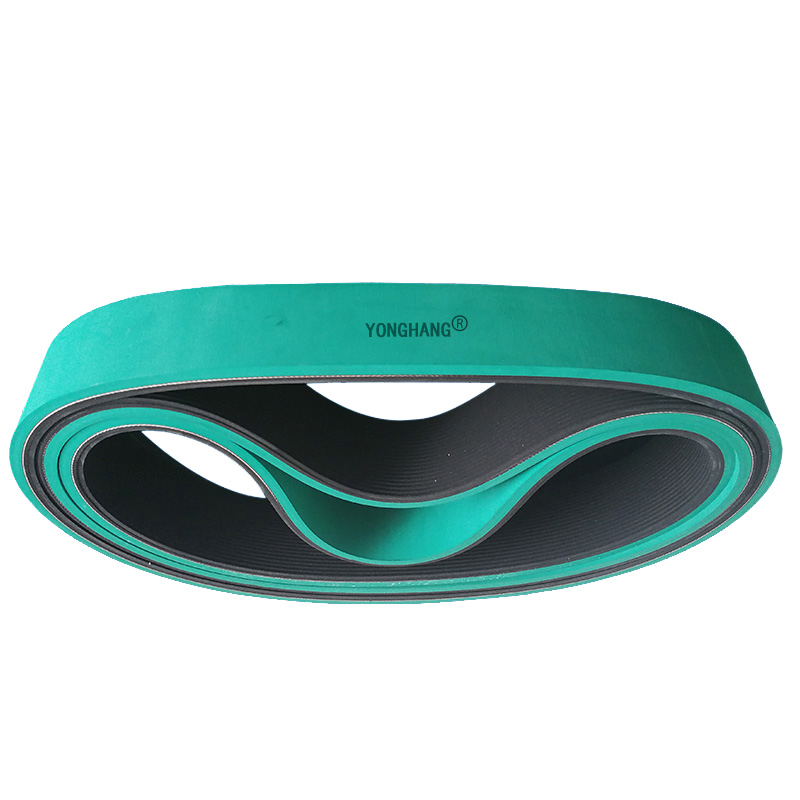
1. Tooth pitch: 4.7mm
2.Width: 20-400mm
3. Thickness: 12-30mm
4. Friction coefficient: 1-2
5. Operating temperature: -20℃~+80℃
6. Minimum wheel diameter: 150mm (recommended)
7. Tensile rate: 0.75~0.85 (recommended)
8. Fracture strength: 232~248 (kgf/wedge)
The above is the main technical parameters of PL toothed pull cable belt, hope to provide professional reference information for you to buy PL toothed pull cable belt! If you want to consult or buy products can contact us through the following contact information.
The Ultimate Guide to Choosing the Right PL Tooth Pull Cable Belt: A Manufacturer's Perspective
In the intricate world of power transmission and linear motion, efficiency, precision, and reliability are non-negotiable. Among the myriad of components that drive modern machinery, the Positive Locking (PL) tooth pull cable belt stands out for its unique ability to deliver perfectly synchronized movement without slip. However, not all PL belts are created equal. Selecting the wrong one can lead to premature failure, costly downtime, and compromised product quality.
Yonghang as a specialist manufacturer of these critical components, we understand that the selection process can seem daunting. This guide is designed to demystify that process. We will walk you through the key engineering considerations to ensure you specify the perfect PL tooth pull cable belt for your application, maximizing performance and lifespan.
Understanding the Core Advantage: The Positive Locking Principle
First, let's clarify what sets a PL belt apart. Unlike traditional trapezoidal (T) or curvilinear (HTD) tooth profiles that rely on some degree of friction and can be prone to "ratcheting" (jumping teeth) under high loads, the PL profile is engineered for true positive engagement.
The belt tooth is designed to fit perfectly into the pulley groove, creating a smooth, rolling engagement and disengagement. This design:
Eliminates Slip: Guarantees a constant speed ratio between the driver and driven pulleys, essential for synchronization.
Handles Higher Loads: The full flank contact distributes load more effectively, allowing for higher torque transmission in a smaller package.
Improves Positioning Accuracy: Critical for used in extruders,e.g. in caterpillar haul.offs
for cables, wires, pipes, hoses, etc.
With this fundamental advantage in mind, let's delve into the selection criteria.
1. Define Your Load and Torque Requirements
This is the most critical starting point. Underestimating the load will lead to catastrophic failure, while over-specifying can lead to unnecessary cost and reduced flexibility.
Peak vs. Continuous Torque: Distinguish between the maximum torque the system will ever see (peak, often during startup or sudden stops) and the torque during normal running (continuous). Your belt must be rated for both. The tensile members—typically the steel or aramid cords inside the belt—must withstand the peak tension without yielding.
Calculate Tension: Use the standard belt drive formula: Tension (T) = (Torque / Pulley Pitch Radius). The sum of the tight-side and slack-side tension determines the total load on the belt cords. Always include a safety factor (e.g., 1.5 to 2.0 for stable loads, higher for shock loads).
Manufacturer's Insight: A high-quality PL belt will have clearly documented tensile strength ratings. Don't just look at the tooth profile; the cable package is the belt's backbone. Ask your supplier for the ultimate tensile strength of the cord and the working tension limit of the belt.
2. Select the Correct Pitch and Width
The pitch and width of the belt are the primary determinants of its power transmission capacity.
Pitch: This is the distance between the center of one tooth to the center of the next (e.g., PJ2.34mm, PK3.56mm, PL4.7mm, PM9.4mm,).
Smaller Pitches (e.g., PJ2.34mm, PK3.56mm): Offer smoother, quieter operation, higher speeds, and the ability to use smaller diameter pulleys. Ideal for high-precision, low-to-moderate load applications For example, medical tubing, small cables
Larger Pitches (e.g., PL4.7mm, PM9.4mm): Are designed for high-torque, high-load applications. They have larger, stronger teeth and heavier cables. Common in heavy-duty automation, conveyor drives, and material handling systems.For example large cables, optical cables, and submarine cables
Width: Once the pitch is selected, the width becomes the variable for increasing load capacity. A wider belt has more teeth in contact with the pulley and a broader, stronger cable package. If your calculated load is at the upper limit for a 50mm wide belt, moving to a 70mm or 80mm width of the same pitch is the solution.
Yonghang Manufacturer's Insight: The relationship between pitch, width, and pulley diameter is crucial. A belt requires a minimum number of teeth in mesh with the pulley to transmit the load effectively. Using a pulley that is too small for a given belt pitch and width will cause premature tooth wear and failure. Consult Yonghang supplier’s engineering data for the minimum recommended number of teeth in mesh.
3. Evaluate Environmental and Operational Conditions
The physical environment is a major factor in belt longevity. A belt perfect for a cleanroom will fail rapidly in a hostile setting if not specified correctly.
Temperature: Standard polyurethane (TPU) belts typically operate in a range of -30°C to +80°C. For higher temperatures (up to 110°C or more), specialized TPU or other materials may be required. Low temperatures can make standard PU brittle.
Oils, Chemicals, and Moisture: Standard PU has poor resistance to oils and certain chemicals. For such environments, specify belts made with oil- and chemical-resistant polyurethane. For applications involving constant moisture or washdowns (e.g., food & beverage, pharmaceutical), this is a mandatory requirement to prevent belt degradation.
Abrasive Dust and Particulates: Fine, abrasive particles can settle in pulley grooves and grind away at the belt teeth. A tightly sealed housing is the best defense, but a more wear-resistant belt compound can also be specified.
Static Electricity & FDA/USDA Compliance: In electronics manufacturing or cleanrooms, a static-dissipative or conductive belt may be necessary to prevent damage to sensitive components. In food and pharmaceutical processing, the belt material must be FDA-approved and often feature a white or light-colored, non-marking cover.
Yonghang Manufacturer's Insight: Don't just state the environment; be specific. "We have occasional oil mist" is very different from "The belt is constantly submerged in coolant." This allows us to recommend the exact right material compound.
4. Consider the Cable Package: The Heart of the Belt
The teeth transmit the force, but the steel or aramid cables carry it. The configuration of this cable package defines the belt's strength and flex life.
Cable Material:
High-Carbon Steel: The standard for most applications. Offers excellent tensile strength and minimal stretch.
Aramid (Kevlar®): Offers exceptional strength with zero stretch and is non-metallic. Ideal for applications requiring magnetic resonance immunity (e.g., MRI machines) or where complete non-conductivity is needed.
Cable Arrangement: Cables can be arranged in a single row or multiple rows. A well-designed multi-row configuration provides better load distribution, improved flexibility, and higher resistance to flex fatigue.
Yonghang Manufacturer's Insight: A belt's "minimum pulley diameter" is directly related to its cable package. A belt with a larger, stiffer cable package cannot bend as tightly without overstressing the cables, leading to premature failure. Always verify that your chosen belt can operate on your smallest pulley.
5. Match the Belt to Your Performance Needs
Beyond basic power transmission, what else do you need the belt to do?
Speed: PL belts can run at very high speeds. However, centrifugal force can cause the belt to lift off the pulley grooves at extremely high RPMs. Ensure the belt is rated for your maximum operational speed.
Backlash and Positioning Accuracy: True PL belts, when properly tensioned, have near-zero backlash. For the ultimate in precision, some manufacturers offer "pre-stretched" belts where the cables have been tensioned during manufacturing to eliminate operational stretch.
Noise: Smaller pitches generally run more quietly. A well-lubricated (if applicable) and correctly tensioned system in a proper housing will be the quietest.
A Practical Selection Checklist
Use this list as a guide for your next project:
Application: (e.g., 3-axis Cartesian robot, conveyor drive, medical analyzer).
Peak Torque: ________ Nm | Continuous Torque: ________ Nm
Speed: ________ RPM | Required Positioning Accuracy: ________ mm
Pulley Details: Driver Pulley Pitch Diameter = ________ mm | Number of Teeth = ________
Center Distance: Approximately ________ mm (Fixed or adjustable?)
Environment: (Check all that apply) [ ] Clean/Dry [ ] Oily [ ] Chemical [ ] Wet/Washdown [ ] High Temp (>80°C) [ ] Abrasive Dust
Special Requirements: [ ] FDA/USDA [ ] Static Dissipative [ ] Non-marking [ ] High Flexibility
Conclusion: Partner with Yonghang Manufacturer
Choosing the right PL tooth pull cable belt is a systematic process of matching its capabilities to your application's demands. By carefully considering load, pitch, environment, and performance needs, you can ensure a reliable and efficient drive system.
The most important step, however, is to engage with a knowledgeable Yonghang manufacturer early in your design process. A reputable factory doesn't just sell belts; we provide engineering support.our team of experts can help you calculate loads, verify pulley sizes, and recommend the optimal belt construction and material for your specific challenge.
By leveraging this expertise, you transform a simple component purchase into a strategic partnership for success, ensuring your machinery operates at its peak for years to come.
Please contact us direct for more information regarding your specific requirements.
URL video:http://www.yhbelt.com
Whatapp&wechat:+ 0086 13418103085
Email :sales@yhbelt.com

YONGHANG specializes in produce and custom coated transmission belts for 12 years.
Contact Details