



This article provides a comprehensive overview of the latest advancements in 3D printer belt technology tailored for high-speed and industrial-grade applications.
The Future Is Here: New Trends in Belt Technology for High-Speed 3D Printing and Industrial Printing
2025-11-06
Thermal-Resistant Coatings
Another significant trend in belt technology is the application of thermal-resistant coatings. These coatings are designed to protect belts from heat degradation, which is a common issue in high-temperature printing environments. For example, belts used in FDM (Fused Deposition Modeling) printers are often exposed to elevated temperatures during the extrusion process.
Thermal-resistant coatings prevent the belts from warping or losing their elasticity, ensuring consistent performance throughout the printing cycle. This innovation is particularly beneficial for industrial applications where printers operate at high temperatures for extended periods, such as in the production of metal or high-performance plastic components.
Yonghang Design Innovations for Precision and Efficiency
Beyond material advancements, design innovations have played a crucial role in enhancing the performance of 3D printer belts. These innovations focus on improving precision, reducing vibration, and optimizing energy efficiency.
Micro-Grooved Surface Designs
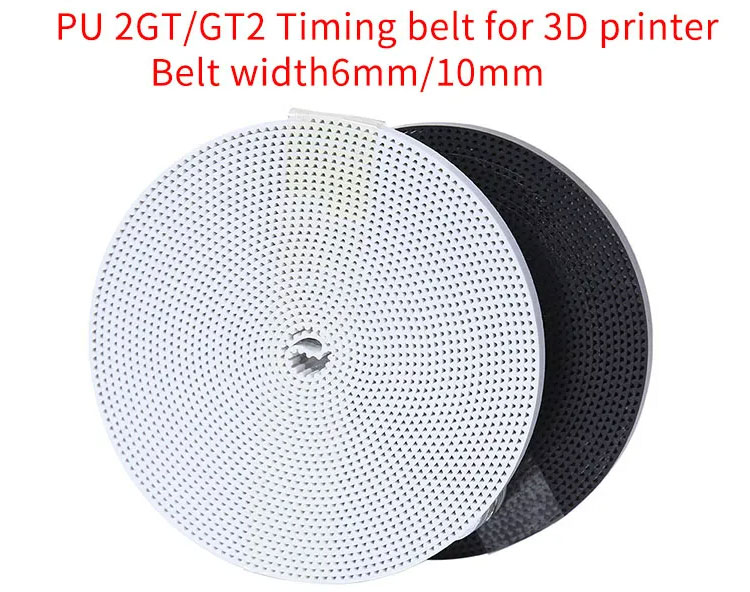
One of the most notable design trends is the use of micro-grooved surface designs on belts. These grooves are meticulously engineered to provide better grip and traction between the belt and the printer's pulleys. The result is a significant reduction in slippage, which is a common issue in high-speed printing applications.
The micro-grooved surface also helps in distributing the load more evenly across the belt's width, preventing localized wear and tear. This design feature ensures that the belt maintains its alignment and tracking accuracy, which is essential for achieving high-quality prints with minimal defects.
Lightweight and Low-Inertia Belts
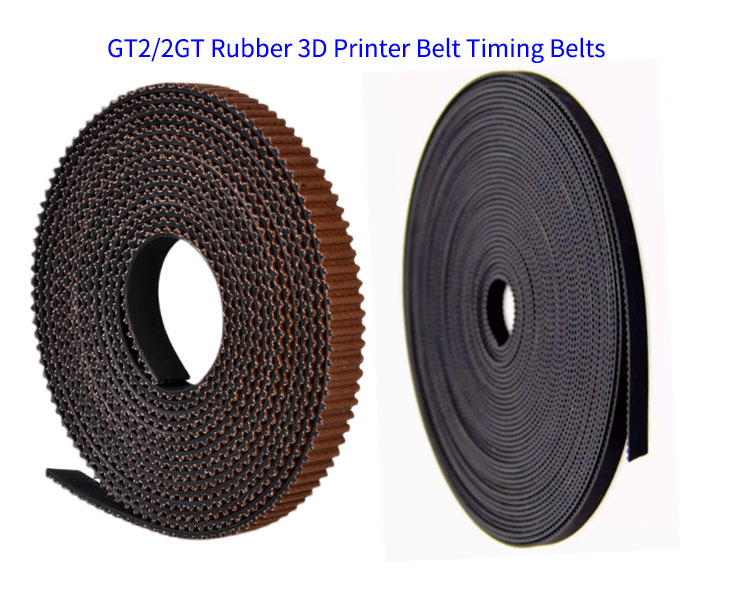
In the pursuit of faster printing speeds, manufacturers have developed lightweight and low-inertia belts. These belts are designed to reduce the overall mass of the moving parts in the printer, allowing for quicker acceleration and deceleration. The lower inertia also minimizes vibrations, which can negatively impact print precision.
Lightweight belts are particularly advantageous in industrial-grade 3D printers, where speed and efficiency are paramount. By reducing the energy required to move the belt, these innovations contribute to lower operational costs and extended equipment lifespan.
Application-Specific Enhancements
The 3D printing industry encompasses a diverse range of applications, each with unique requirements. Belt manufacturers have responded by developing application-specific enhancements tailored to meet these demands.
High-Speed Printing Belts
For high-speed printing applications, belts are designed to withstand rapid changes in direction and speed without compromising performance. These belts often feature reinforced edges and enhanced flexibility to accommodate the dynamic movements required in fast-paced printing environments.
High-speed printing belts are essential for industries that prioritize throughput, such as automotive prototyping and consumer electronics manufacturing. By ensuring reliable and consistent performance, these belts enable manufacturers to achieve higher production rates without sacrificing print quality.
Industrial-Grade Printing Belts
Industrial-grade 3D printers operate under harsh conditions, including high loads, continuous use, and exposure to chemicals or extreme temperatures. Belts designed for these applications are built to endure these challenges, offering superior durability and resistance to environmental factors.
These belts are often made from advanced materials like polyurethane or thermoplastic elastomers, which provide excellent resistance to oils, solvents, and UV radiation. Additionally, industrial-grade belts are engineered to maintain their performance over extended periods, reducing maintenance requirements and overall operational costs.
Future Outlook
The future of 3D printer belt technology is poised for continued innovation, driven by the growing demand for faster, more precise, and reliable printing solutions. Emerging trends such as smart belts embedded with sensors for real-time monitoring and AI-driven predictive maintenance are on the horizon. These advancements will enable manufacturers to optimize printer performance, reduce downtime, and enhance overall productivity.
As the 3D printing industry continues to evolve, belt manufacturers must stay ahead of the curve by investing in research and development. By embracing new materials, design innovations, and application-specific enhancements, we can ensure that our products meet the ever-changing needs of our customers.
In conclusion, the trends in 3D printer belt technology for high-speed and industrial-grade printing are centered around material advancements, design innovations, and application-specific enhancements. By leveraging these trends, manufacturers can produce belts that deliver superior performance, durability, and efficiency. As a leading provider of 3D printer belts, we are committed to pushing the boundaries of innovation to support our customers' success in the dynamic world of 3D printing.
ReviewsNumber of comments: {{ page.total }}
I want to comment?
{{item.nickname ? (item.nickname.slice(0, 2) + '*****') : item.source === 1 ? 'mall buyer' : '--'}}
{{item.comment_time}}
Review in the {{item.country}}
Reviews
Merchant
{{replyItem.nickname ? (replyItem.nickname.slice(0, 2) + '*****') : replyItem.source === 1 ? 'mall buyer' : '--'}}
{{replyItem.parent_nickname ? (replyItem.parent_nickname.slice(0, 2) + '*****') : '--'}}
{{replyItem.is_merchant_reply === 1 ? replyItem.reply_time : replyItem.comment_time}}
Review in the {{replyItem.country}}
Reviews

No customer reviews
Recommended for you
no data
Get in touch with us
YONGHANG specializes in produce and custom coated transmission belts for 12 years.
Useful Links
Products
Contact Details
Add:
4th Floor, Building B8, Chuangbao Creative Park, Federal Industrial Zone, West Yushan Road, Panyu District, Guangzhou, China. 511400
Tel: +86 134 1810 3085
E-mail: sales@yhbelt.com
Copyright © 2026 Guangzhou Yonghang Transmission Belt Co., Ltd. - www.yhbelt.com All Rights Reserved. | Sitemap | Privacy Policy