



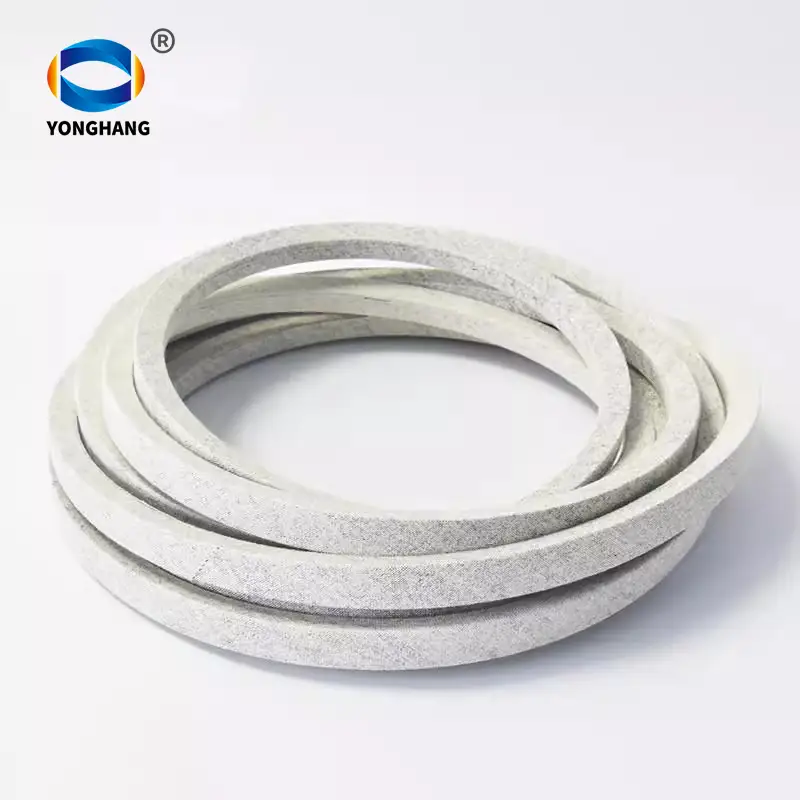
White V belt
White V-Belt is a type of power transmission belt characterized by its trapezoidal (V-shaped) cross-section and its white or light-colored rubber compound. The color is a direct result of its specific material composition, which differentiates it from the more common black V-belts.
Type:V belt
Colour:White
Material:rubber
Application:Special wear-resistant model for glove pharmaceutical factory
What is a White V-Belt?
A White V-Belt is a type of power transmission belt characterized by its trapezoidal (V-shaped) cross-section and its white or light-colored rubber compound. The color is a direct result of its specific material composition, which differentiates it from the more common black V-belts.
The "V" shape wedges into the sheave (pulley), increasing the surface contact and grip, which allows it to transmit more power with less slippage compared to a flat belt.
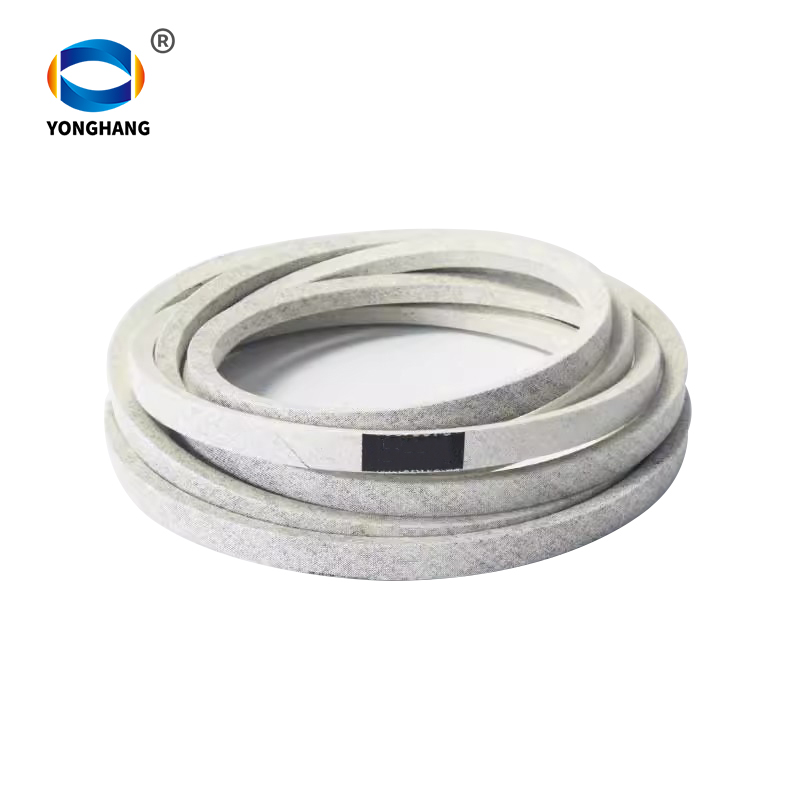
Key Characteristics and Material Composition
The white color typically comes from the use of a neoprene compound or a polyurethane (PU) cover instead of the carbon black used in standard black belts.
Color & Aesthetics:
The primary visual difference. white V belt often chosen for applications where cleanliness and appearance matter, as it doesn't leave black smudges or marks.
Material:
Neoprene (Polychloroprene): A high-quality synthetic rubber known for its excellent resistance to oil, grease, ozone, weathering, and abrasion. It remains flexible over a wide temperature range and has good tensile strength. The white version simply omits the carbon black filler.
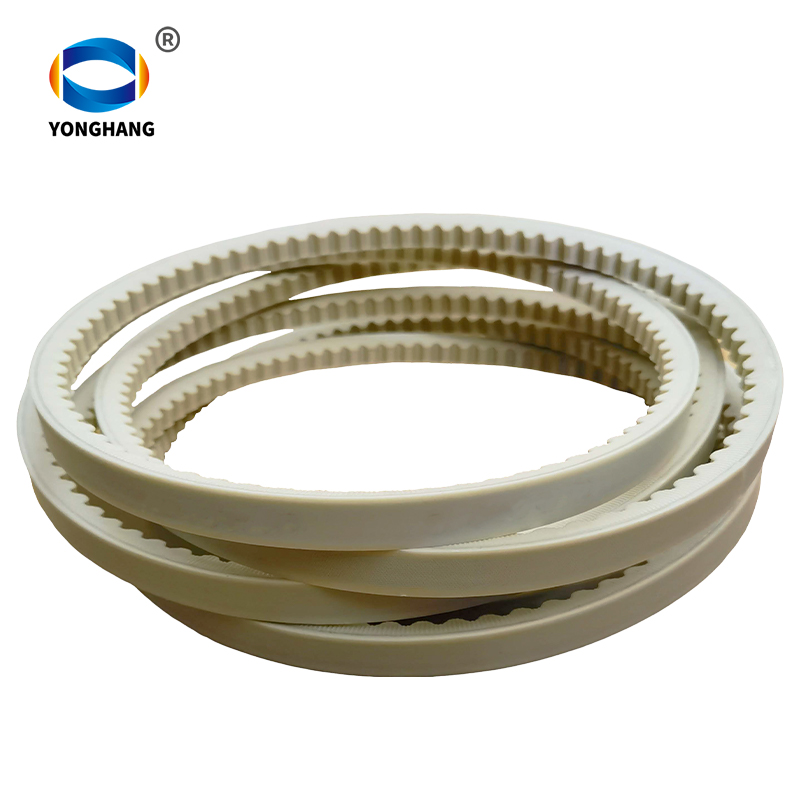
Polyurethane (PU): Some white V-belts have a polyurethane cover over a core of polyester cords or a Kevlar tension member. PU offers exceptional abrasion resistance, high flexibility, and is resistant to many oils and chemicals.
Polyurethane (PU) V belt:
Static Conductivity:
This is a crucial distinction. Standard black V-belts use carbon black to make them static conductive, which prevents a buildup of static electricity that could damage sensitive equipment or cause sparks in hazardous environments.
White V-belts are typically NOT static conductive. This is an important consideration if you are replacing a black belt in an application where static dissipation is required.
Temperature & Ozone Resistance:
Neoprene-based white belts generally have very good resistance to ozone and moderate heat, which helps prevent cracking over time.
Common Applications
White V-belts are not just for looks; they are chosen for specific performance characteristics.
Food and Beverage Processing: This is the most common application. Their light color makes contamination (like a fraying belt) easier to detect, and the neoprene or PU material is often USDA-accepted for incidental food contact.
Packaging Machinery: Where cleanliness is important to avoid marking products or packaging.
Printing and Paper Handling Equipment: To prevent black marks on paper or other materials.
Textile Machinery: To avoid staining fabrics.
Medical and Laboratory Equipment: For cleanroom environments and general cleanliness.
Woodworking and Sawmills: Often used on specific machinery like band saws and cut-off saws
Important Considerations Before Replacement
Static Conductivity: Be warned: If you are replacing a black belt with a white one, you may be removing a critical static control component. Check the machine's manual to see if a static-conductive belt is required.
Replace in Matched Sets: On drives with multiple belts, always replace all the belts at the same time, even if only one is broken. Using belts of slightly different lengths will cause the longer ones to carry all the load and fail prematurely.
In summary, a White V-Belt is a specialized version of the classic V-belt, prized for its cleanliness, material resistance, and suitability for industries like food processing and packaging, where its non-marking and easy-to-inspect properties are essential.
YONGHANG specializes in produce and custom coated transmission belts for 12 years.
Contact Details